Authentic Japanese Patterns. Kicotto & Inishie
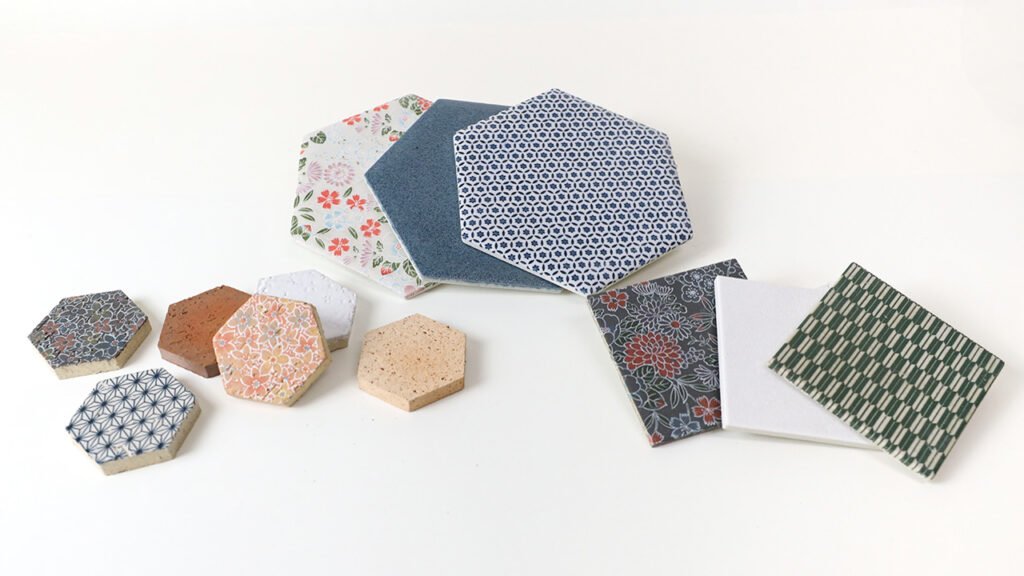
We invite you to explore Kicotto and Inishie, two tile collections featuring accent tiles inspired by traditional Japanese patterns. Ideal for modern interiors seeking a subtle yet authentic Japanese aesthetic, these collections combine design and craftsmanship. This article delves into the meticulous production process behind the tiles, with a closer look at the copper plate transfer printing techniques used to create their intricate patterns.
Table of Contents
■ Kicotto
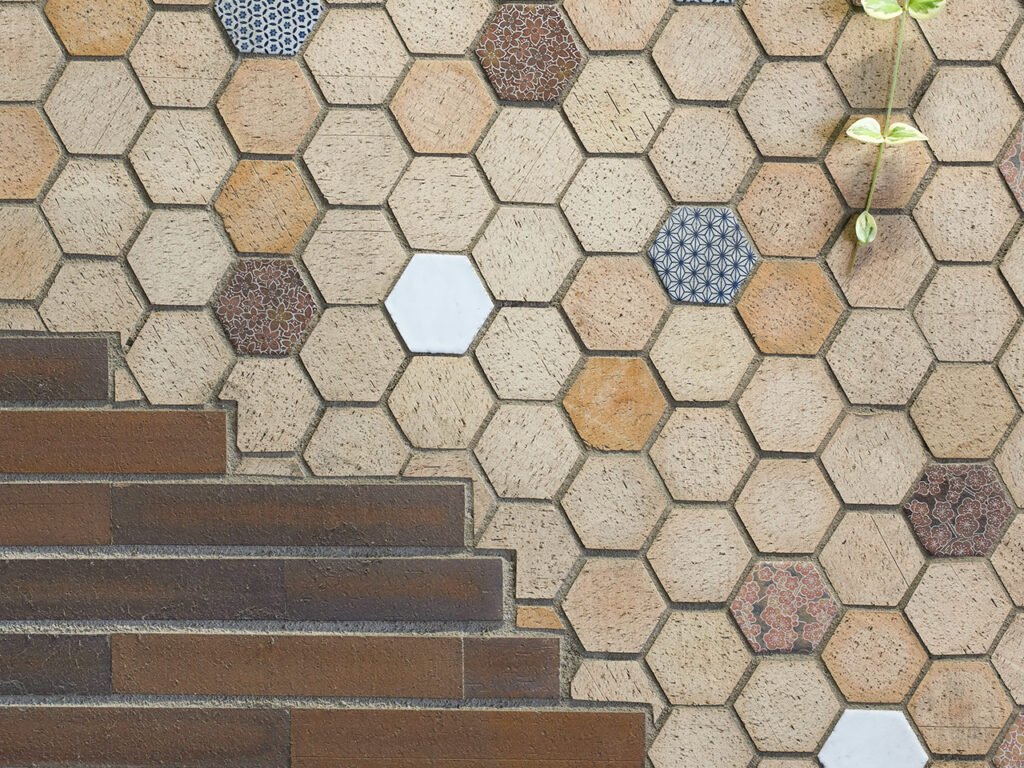
Kicotto is a collection of Japanese-style tiles featured in our main catalog, crafted using the copper plate printing technique.
It is made using a traditional method in which the pieces are stacked in the kiln and fired in a reducing atmosphere, producing subtle color variations that highlight their artisanal character. Thanks to its molding process, each tile has an authentic texture, offering a warm and rich tactile experience unique to handmade ceramics.
The collection features a hexagonal tile measuring 60 × 69 mm and includes nine designs in total: two unglazed smooth-finish versions, one white-glazed tile, and six unglazed decorative tiles featuring floral motifs and classic Japanese patterns.
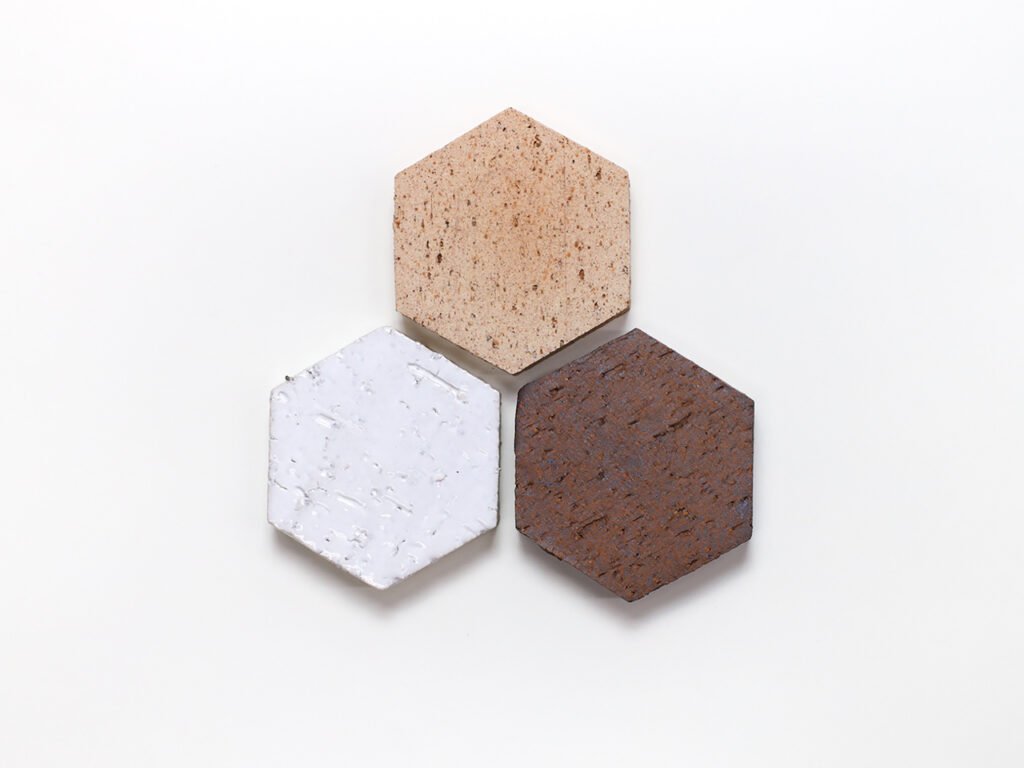
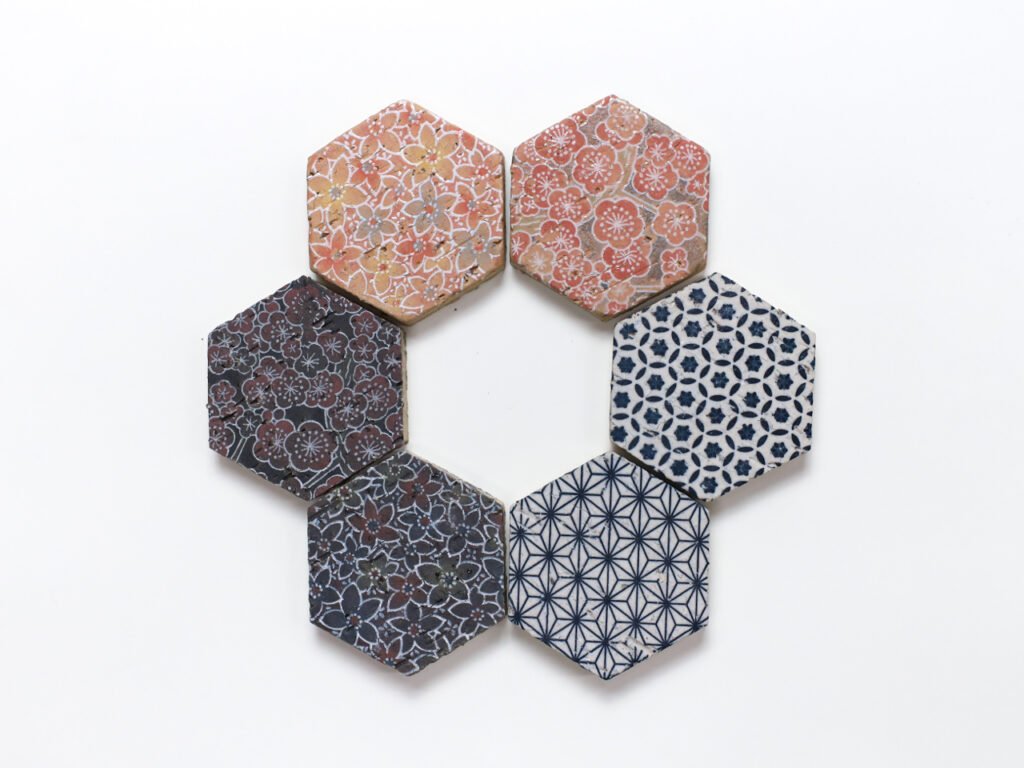
With its simple yet expressive charm, Kicotto fits naturally into spaces of any style, from traditional Japanese to modern or rustic interiors.
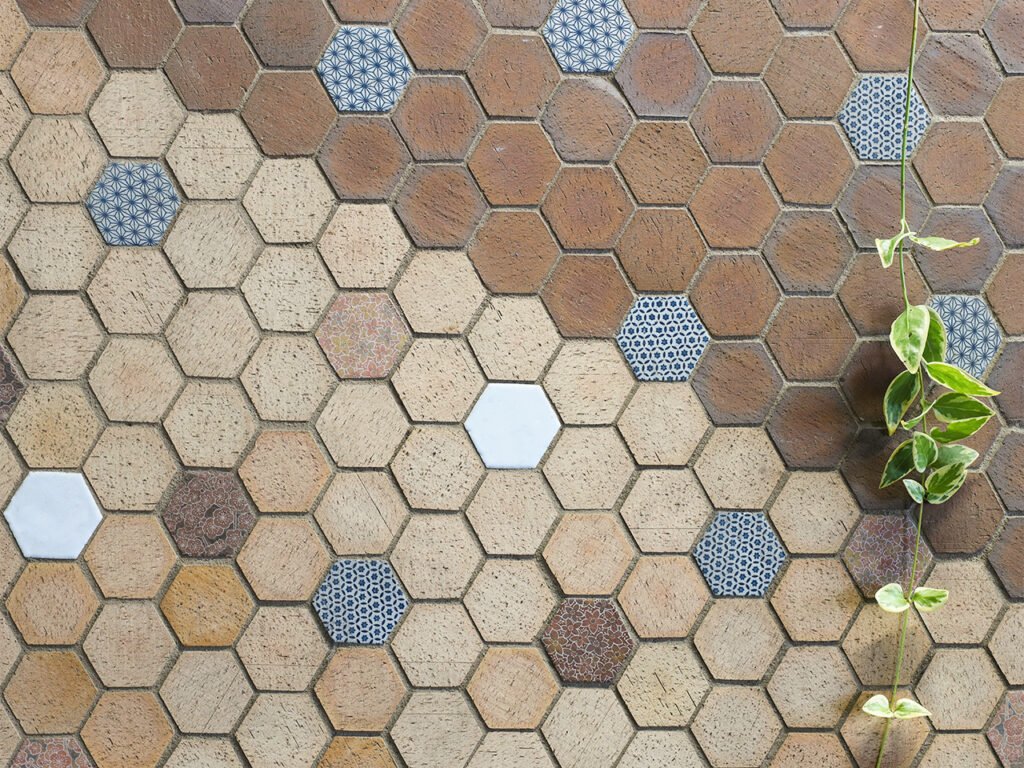
■ Inishie
Inishie is a Japanese-style tile collection featured in our catalog, bringing together traditional motifs and a refined contemporary sensibility. The collection offers a total of 21 designs, including 5 solid colors, 8 floral patterns, and 8 motifs inspired by the Edo period (1603–1868), the historical era when Tokyo was known as Edo.
Inishie is available in two formats: square tiles 97 × 97 mm and hexagonal tiles 170 × 148 mm, allowing for flexible layouts and varied design expressions.
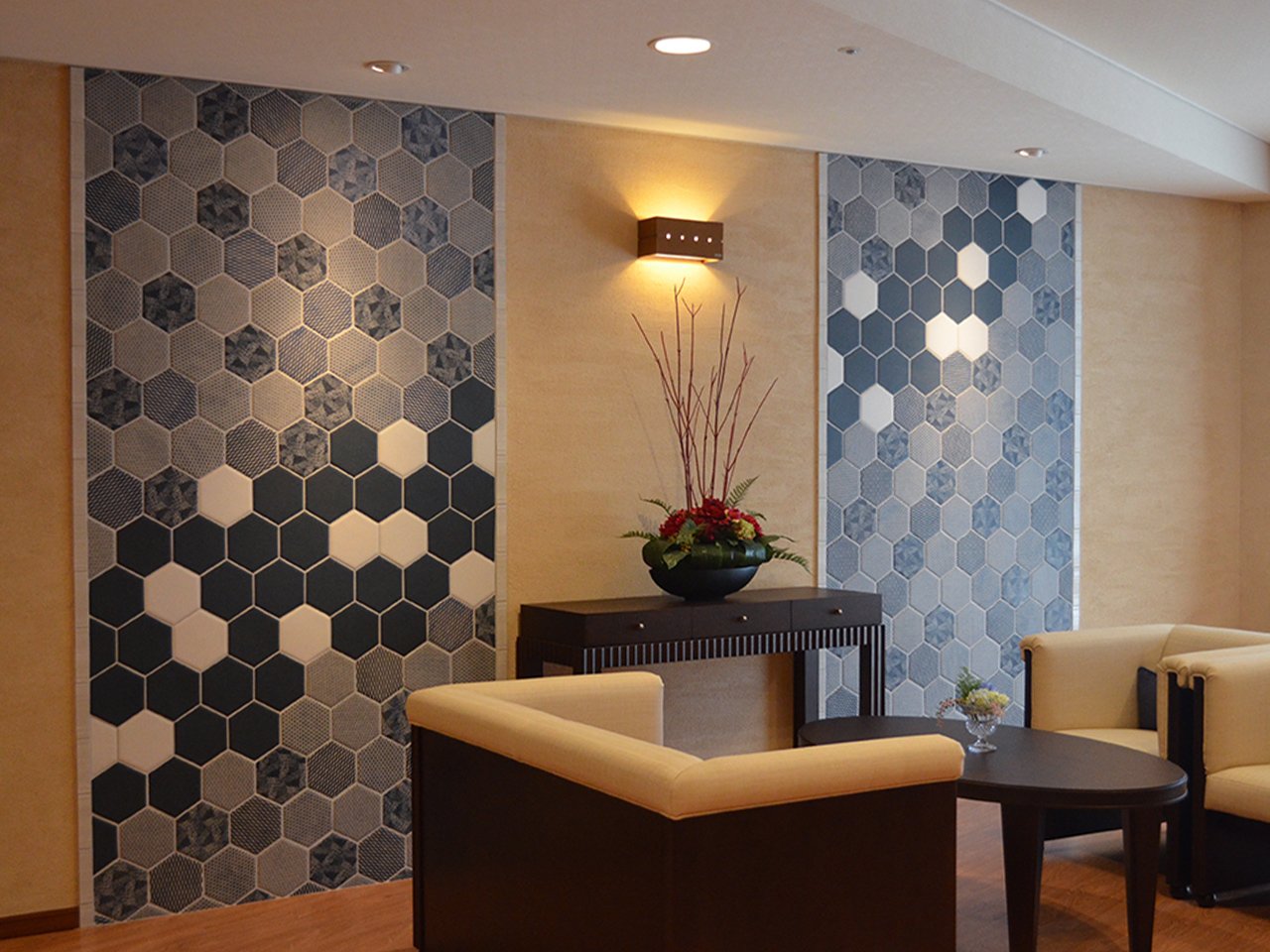
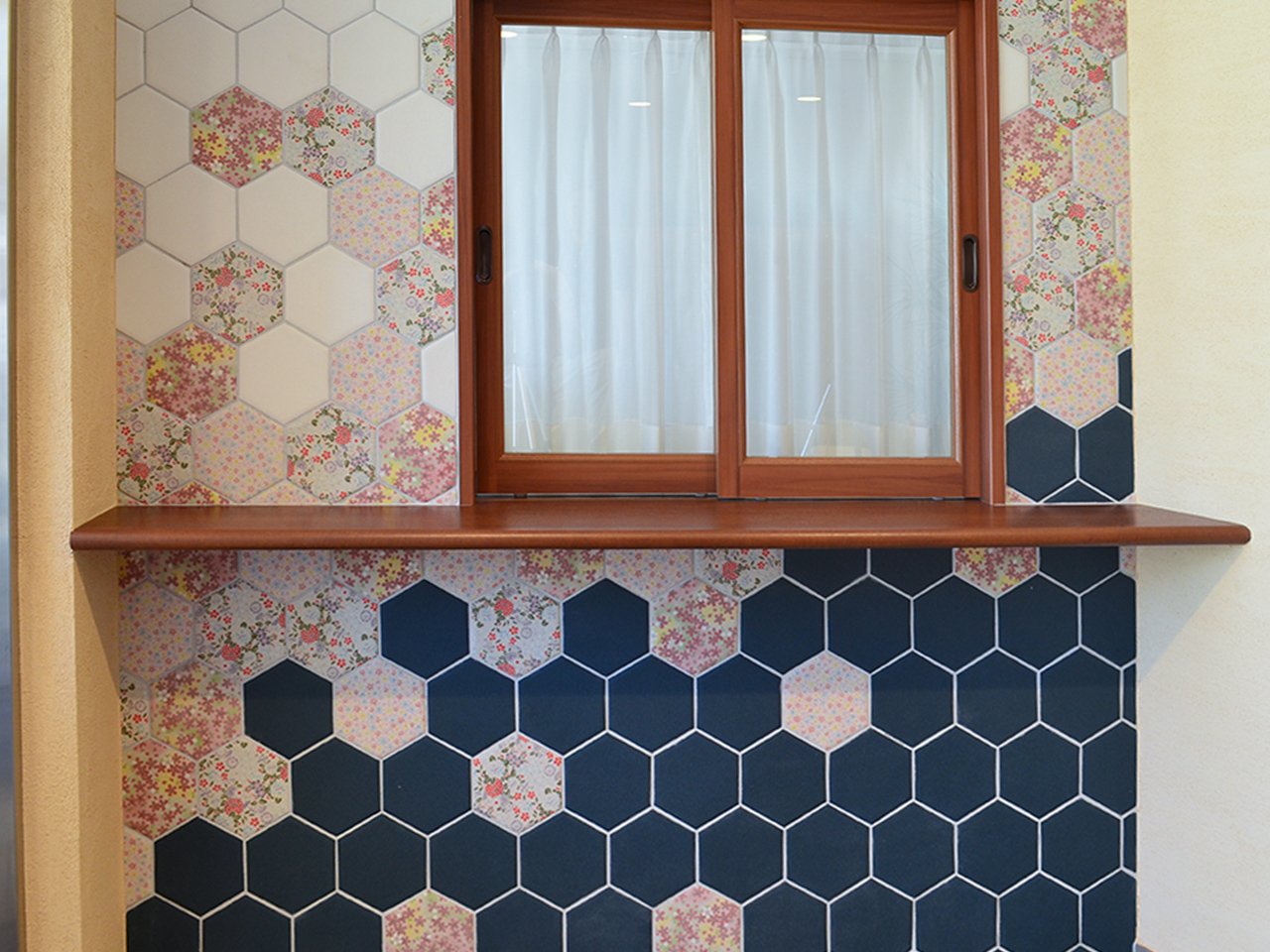
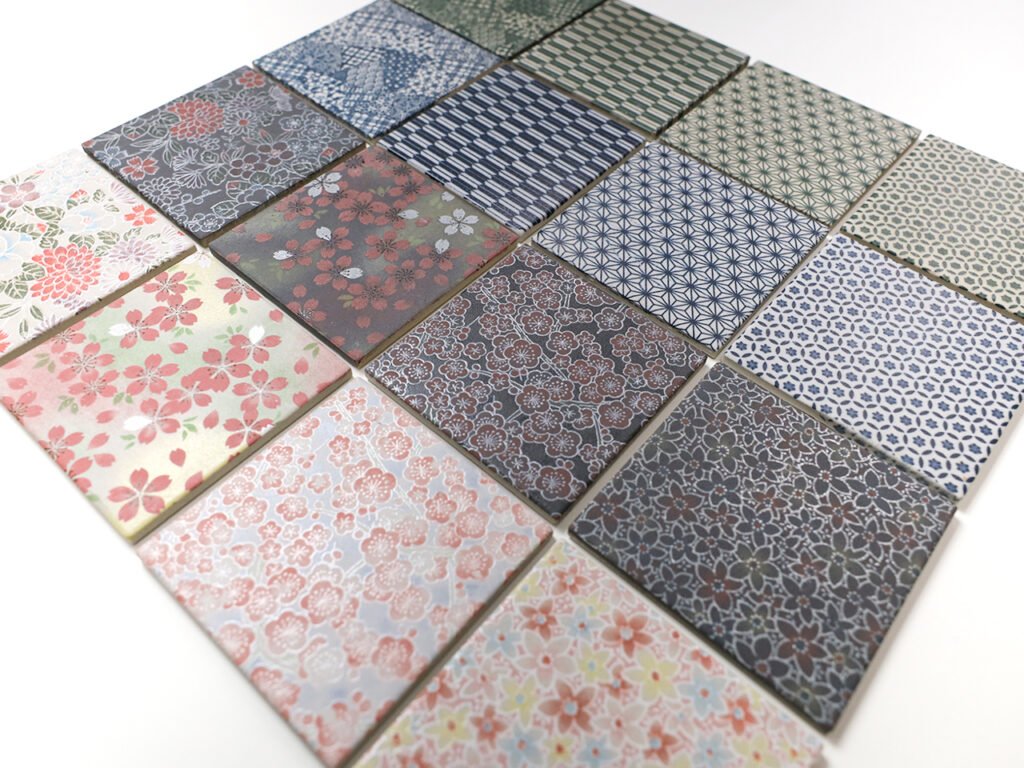
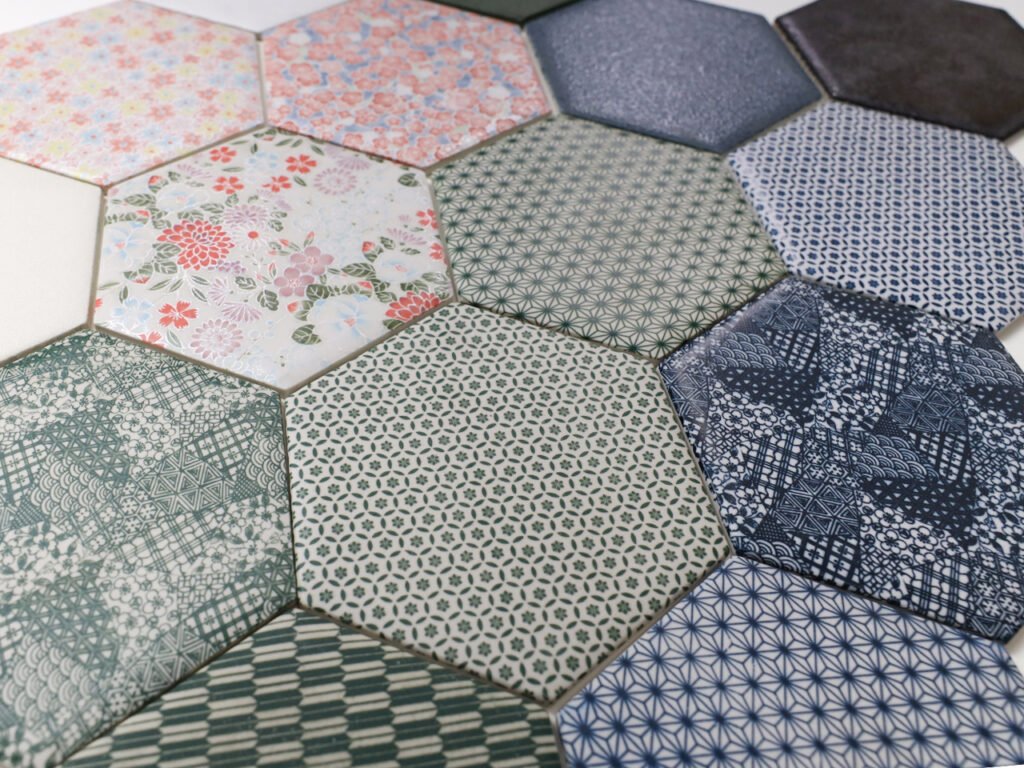
Each tile is crafted to achieve a uniform texture and an elegant, refined finish that enhances both color depth and pattern definition. With its wide range of designs, Inishie enables endless combinations, making it an ideal choice for creating harmonious, distinctive, and highly personalized spaces, from subtle accents to expressive surfaces.
■ Copper Plate Transfer Technique
The copper plate transfer technique is an industrial method that was fully developed in Japan during the Meiji period (1868–1912). Combining artisanal precision with efficient production, this process created a new approach to ceramic decoration that remains in use today.
Copper plate transfer process
| 1. | Engraving the original plate: A design is engraved onto a copper plate, creating the master template. |
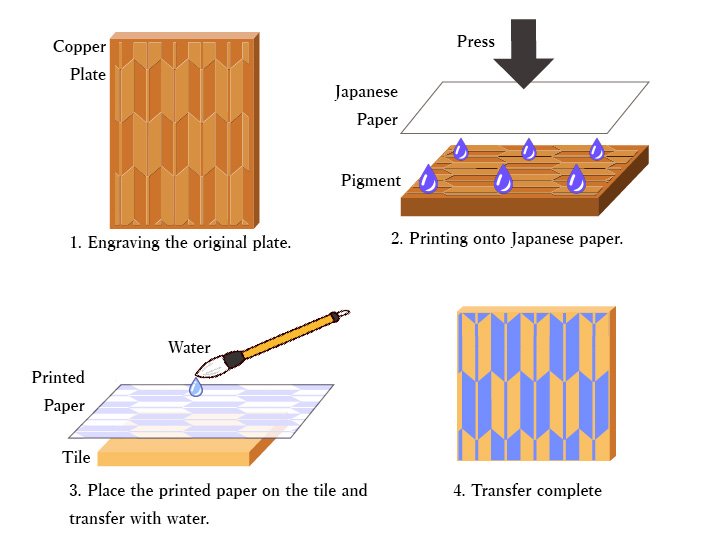 |
| 2. | Printing onto Japanese paper: The plate is coated with pigment, then a sheet of Japanese paper (washi) is placed on top and pressed to transfer the design onto the paper. |
|
| 3. | Transferring to the tile: The printed side of the paper is carefully applied to a bisque-fired tile (fired once without glaze). Using a damp brush, the design is transferred onto the tile’s surface. |
While the process may seem intricate, once the master plate is created, the design can be reproduced consistently and efficiently, which is why this technique has been passed down in the ceramics industry from the Meiji period to today.
Copper plate transfer allows for subtle shading and fine details, similar to hand-drawn designs. It can also be applied not only to flat surfaces but also to edges, curves, and three-dimensional forms. The slight variations in the ink give the design a natural warmth and vitality, creating a nostalgic, handcrafted feel.
Because the design is transferred onto the tile before the final glaze firing, decorations made using this technique are highly durable. This makes them suitable even for light foot traffic areas.
■ Summary
Kicotto and Inishie bring traditional Japanese patterns and refined craftsmanship into contemporary interiors. Through the copper plate transfer technique, these collections achieve delicate details, subtle variation, and lasting durability. Ideal for creating distinctive yet harmonious spaces, Kicotto and Inishie provide a thoughtful way to incorporate Japanese aesthetics into modern architectural and interior design projects.
