Slip Casting. The Process Behind Complex Tile Designs
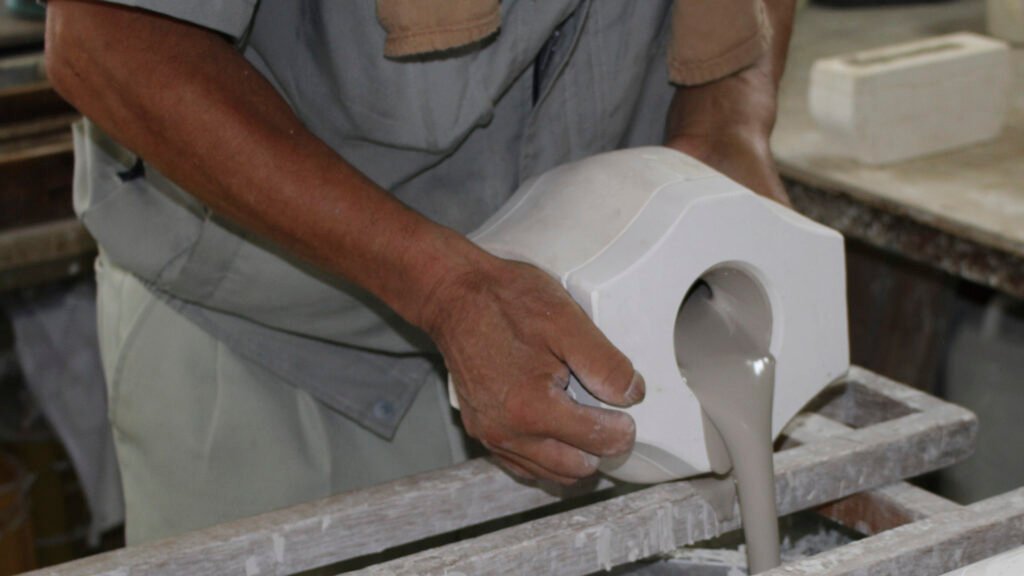
Some ceramic tiles feature shapes and surface details that would be impossible to achieve using conventional manufacturing methods. What makes these designs possible? In this article, you’ll discover the forming technique behind some of the most distinctive ceramic tiles and learn why it remains an essential process for creating complex geometries.
Table of Contents
What Is Slip Casting?
In ceramic tile manufacturing, there are two widely used forming methods: dry pressing, which is based on the compaction of powder under pressure, and wet extrusion, in which a plastic clay body is continuously shaped through a die. However, not all geometries can be achieved using these two processes. When a design requires greater geometric complexity, whether through relief patterns, intricate surface textures, or three-dimensional forms, a third forming method is used: slip casting.
This method consists of pouring a liquid suspension of ceramic particles, known as slip, into a porous mold, typically made of plaster. The mold gradually absorbs part of the water contained in the suspension, causing a solid ceramic layer to form wherever the slip comes into contact with the mold walls. As the process continues, this layer increases in thickness and the piece gradually gains strength. When the piece has reached a sufficient level of solidity, it is removed from the mold, dried, then glazed and fired.
Types of Slip Casting
Within the ceramic industry, two main variants of this method can be distinguished.
Pressure Casting
This variant is the most widely used for the production of ceramic tiles.
In this process, slip is injected under pressure into interconnected plaster molds. The plaster absorbs moisture from the suspension, allowing a solid clay layer to gradually form along the mold walls while pressure is maintained throughout the forming stage. The combination of plaster molds and specialized equipment makes it possible to manufacture large quantities of ceramic pieces with consistent geometry and high dimensional accuracy.
In the tableware industry, this process is primarily used to produce solid items such as plates, bowls, etc.
-
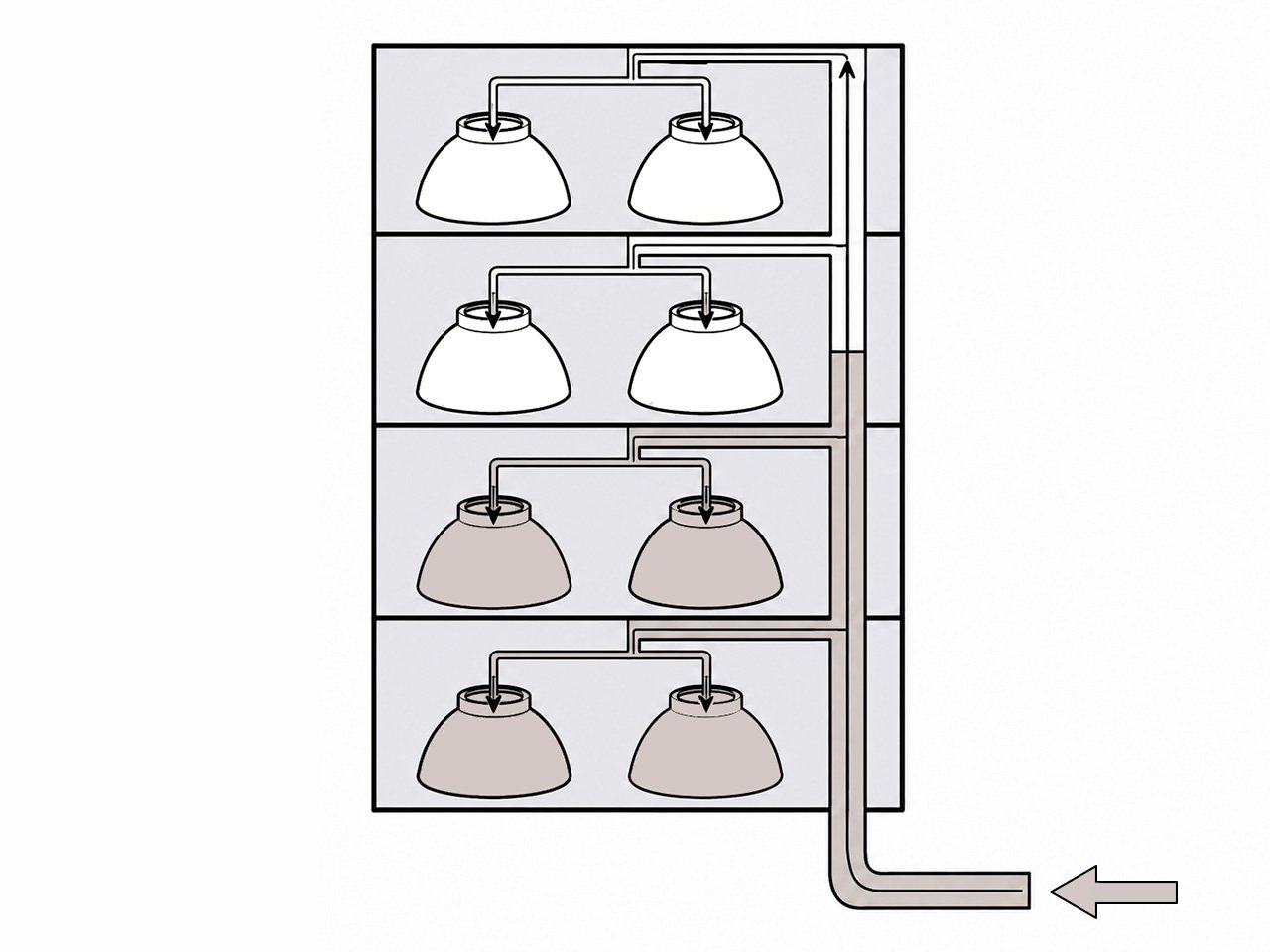
Slip injected through stacked plaster molds
-
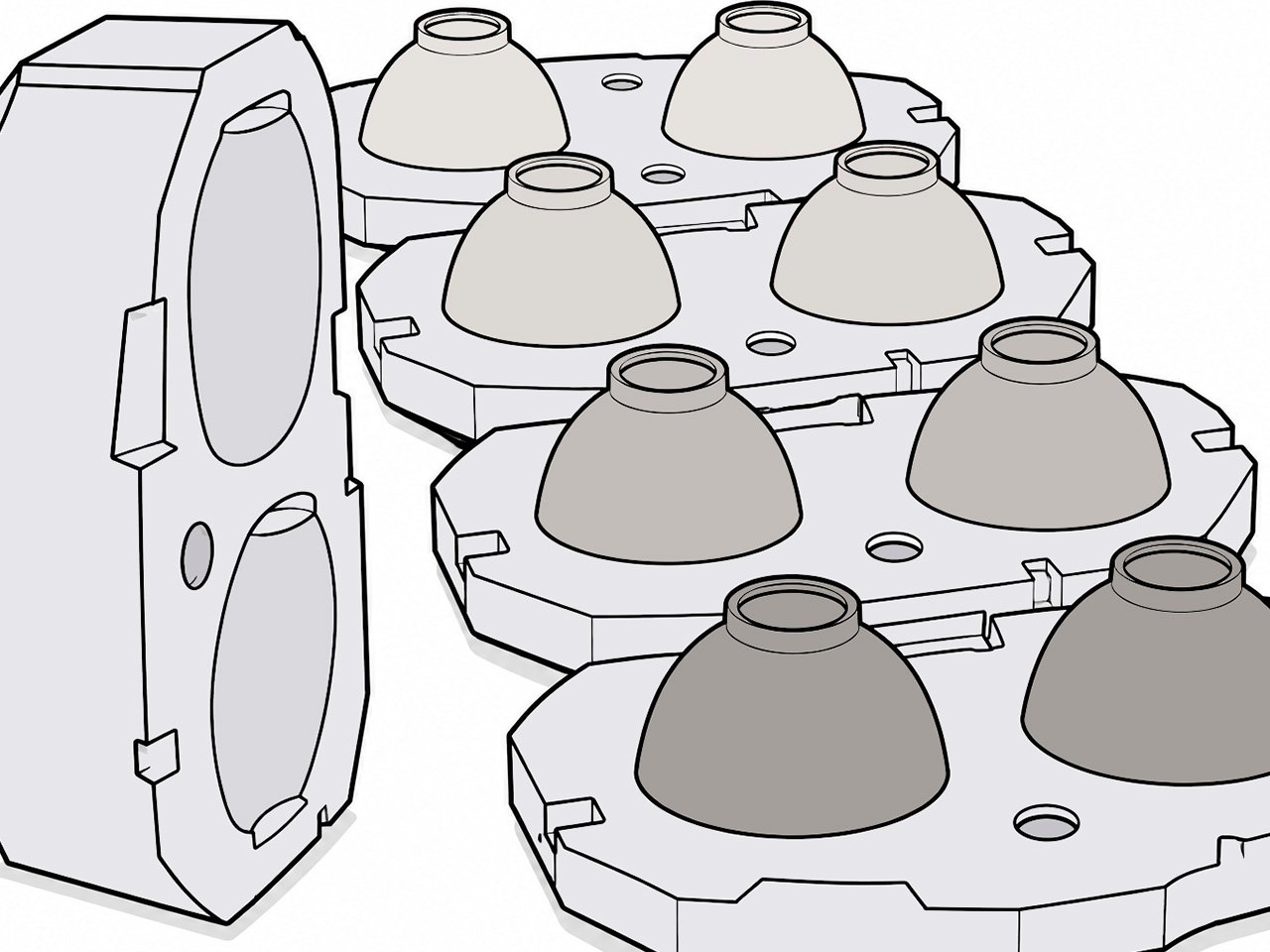
Ceramic pieces are demolded
Drain Casting
In this process, the slip is poured into a porous mold, which absorbs part of the water contained in the suspension and allows a solid ceramic layer to form against the mold walls. Once the desired wall thickness has been reached, the excess slip is drained from the interior of the mold, leaving behind a hollow piece with the required shape. After a period of stabilization, the piece can be removed from the mold.
This second variant, is primarily used in the tableware industry for the production of hollow pieces such as vases, teapots, etc.
-
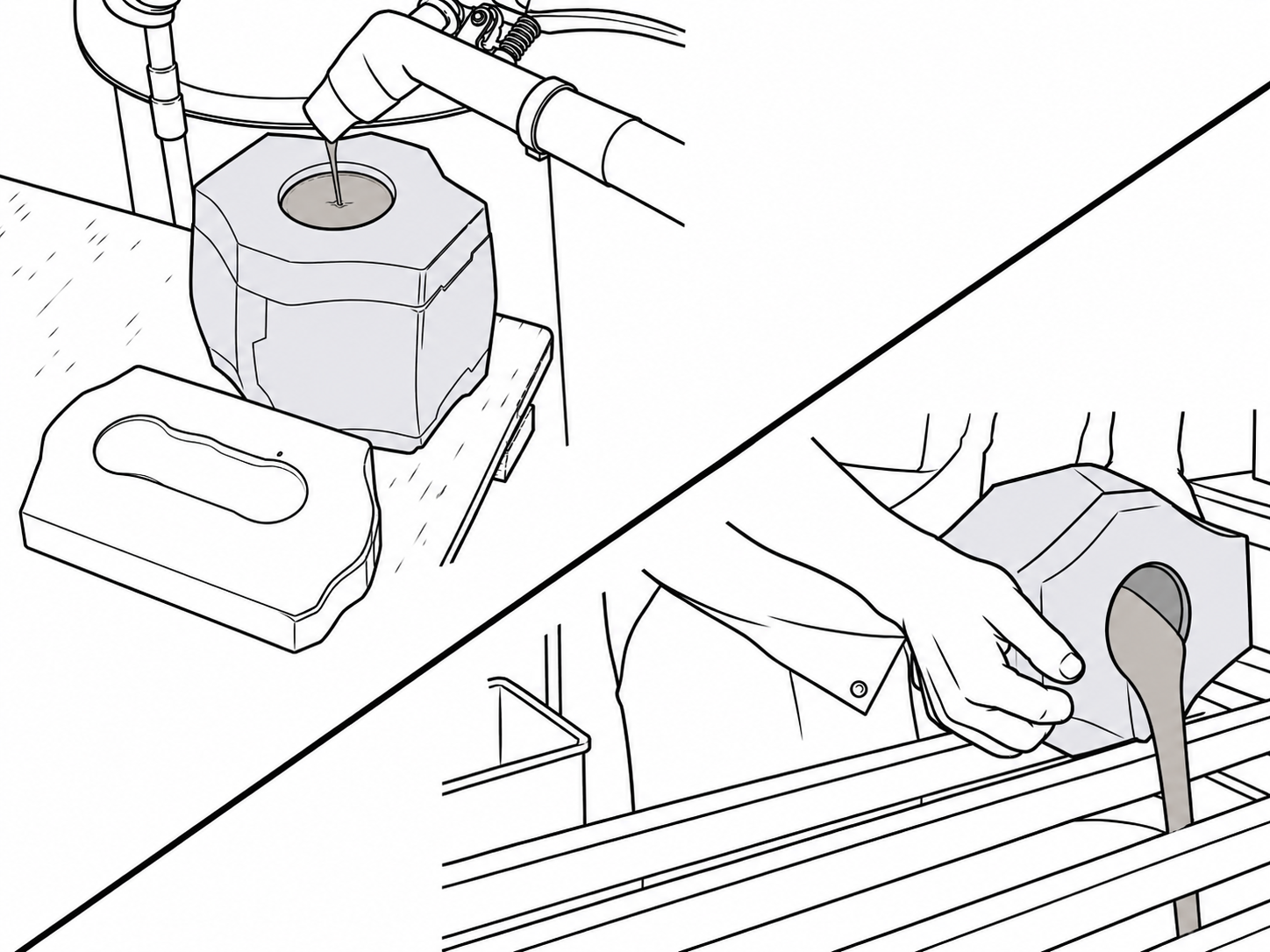
Excess slip is drained after a set time
-
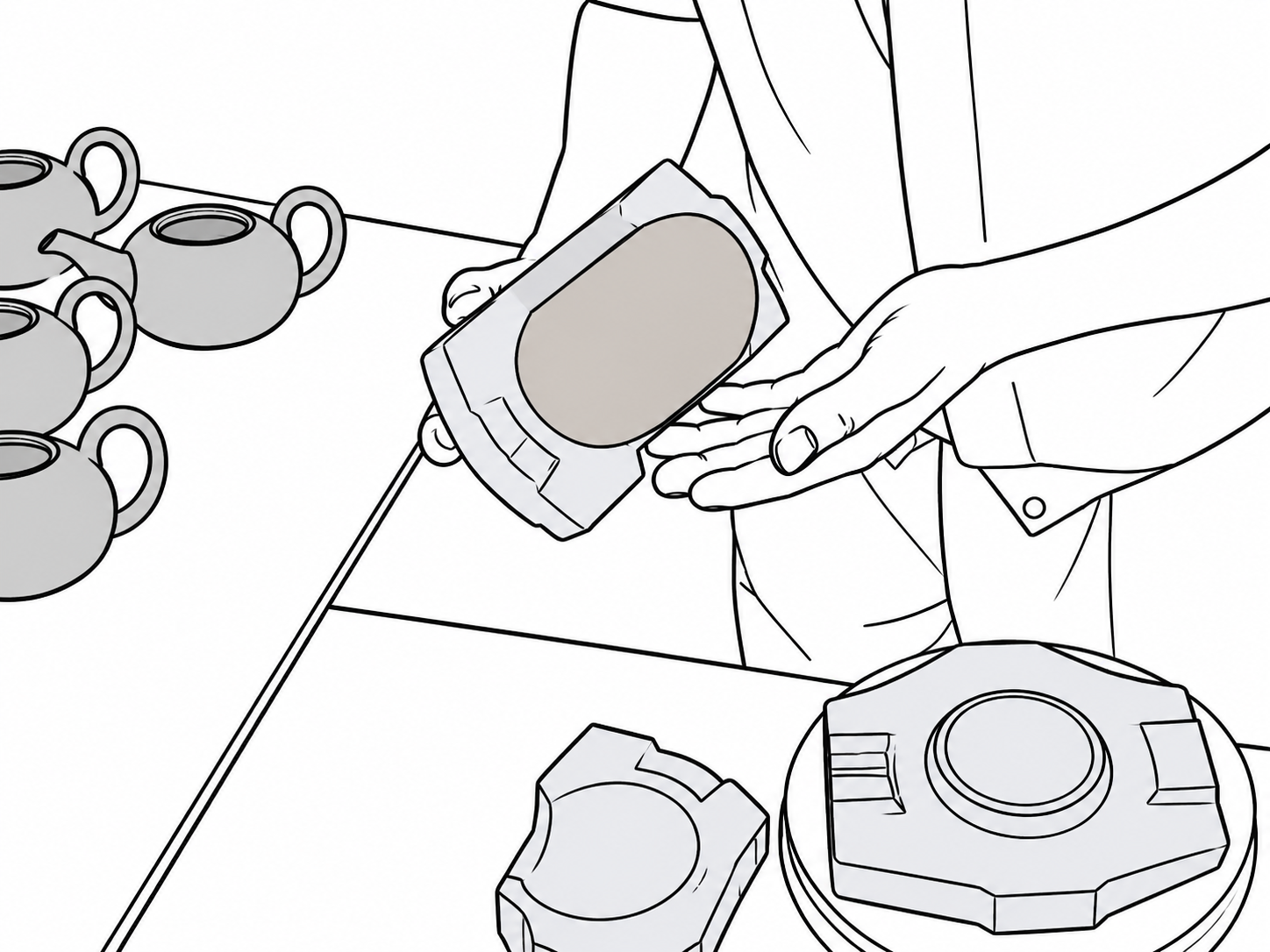
Ceramic pieces are demolded
Advantages and Disadvantages of Slip Casting
Like any forming process, slip casting has both benefits and limitations that should be taken into account.
Advantages
・Flexibility for complex geometries: Ideal for intricate shapes, detailed textures, and 3D forms.
・Suitable for hollow pieces: Particularly well suited for the production of hollow ceramic objects.
・Lower equipment investment: Uses simpler tooling and machinery than dry-pressing or wet-extrusion methods.
・Cost-effective for small-batch production: Ideal for small production runs and custom orders.
・Hight dimensional stability: Produces large, thin ceramic pieces with greater accuracy than wet extrusion.
Disadvantages
・Additional finishing required: Demolding often leaves seam lines or minor imperfections, requiring manual finishing.
・Lower production efficiency: Longer production cycles than pressing or extrusion can reduce productivity.
WA-KEI Slip Casting Tiles
At WA-KEI, we offer several collections produced using this technique, taking advantage of the creative possibilities of slip casting to bring designs with a strong aesthetic identity to life. The result is a range of tiles featuring complex textures and/or three-dimensional forms that add depth, dynamism, and character to any space.
Below are two collections that showcase the potential of this manufacturing method.
Origami
Origami is one of the WA-KEI collections that best demonstrates the creative possibilities of slip casting. Inspired by the geometric folds of traditional Japanese origami, its design creates a visually rich surface where light and shadow enhance the perception of depth and movement.
More than a simple wall covering, Origami transforms the wall into a sculptural element, showcasing the expressive potential that ceramics can achieve when design is no longer constrained by conventional geometries.
-
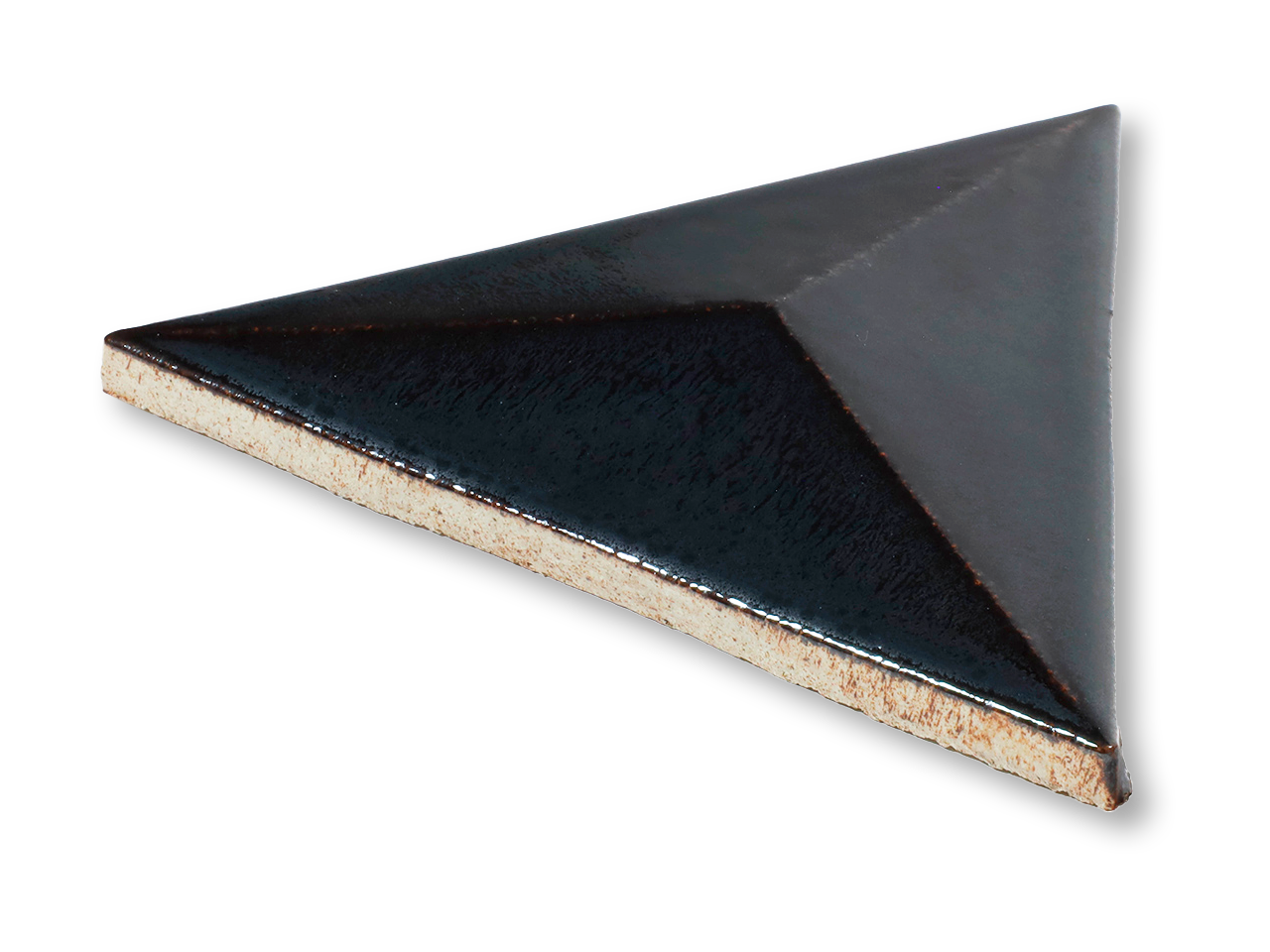
ORI-NO5B. An example of a three-dimensional tile
-
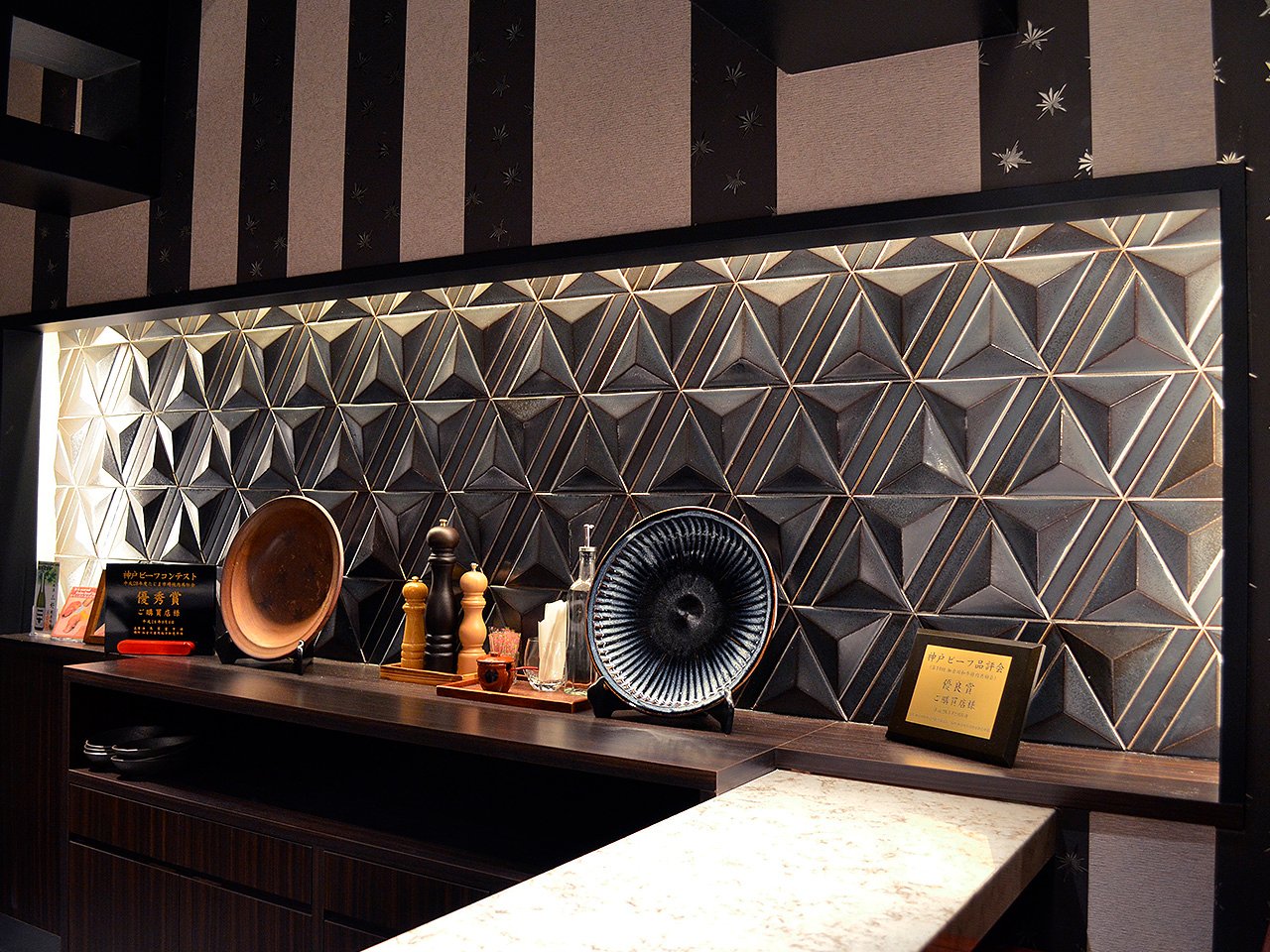
Wanomiya.
Architect: Rakuto Co., Ltd. Design: Risabraire Co., Ltd.
Classical Wa
Inspired by the sensibility of contemporary Japanese aesthetics, Classical Wa combines soft, balanced tones with a delicately textured surface that brings visual depth and material richness to each piece. The result is a tile capable of creating calm and harmonious spaces while illustrating how slip casting can be used to develop intricate surface textures.
Rather than relying on pronounced relief or three-dimensional forms, Classical Wa demonstrates how subtle variations in texture can enrich a surface, creating a refined and timeless architectural expression.
-
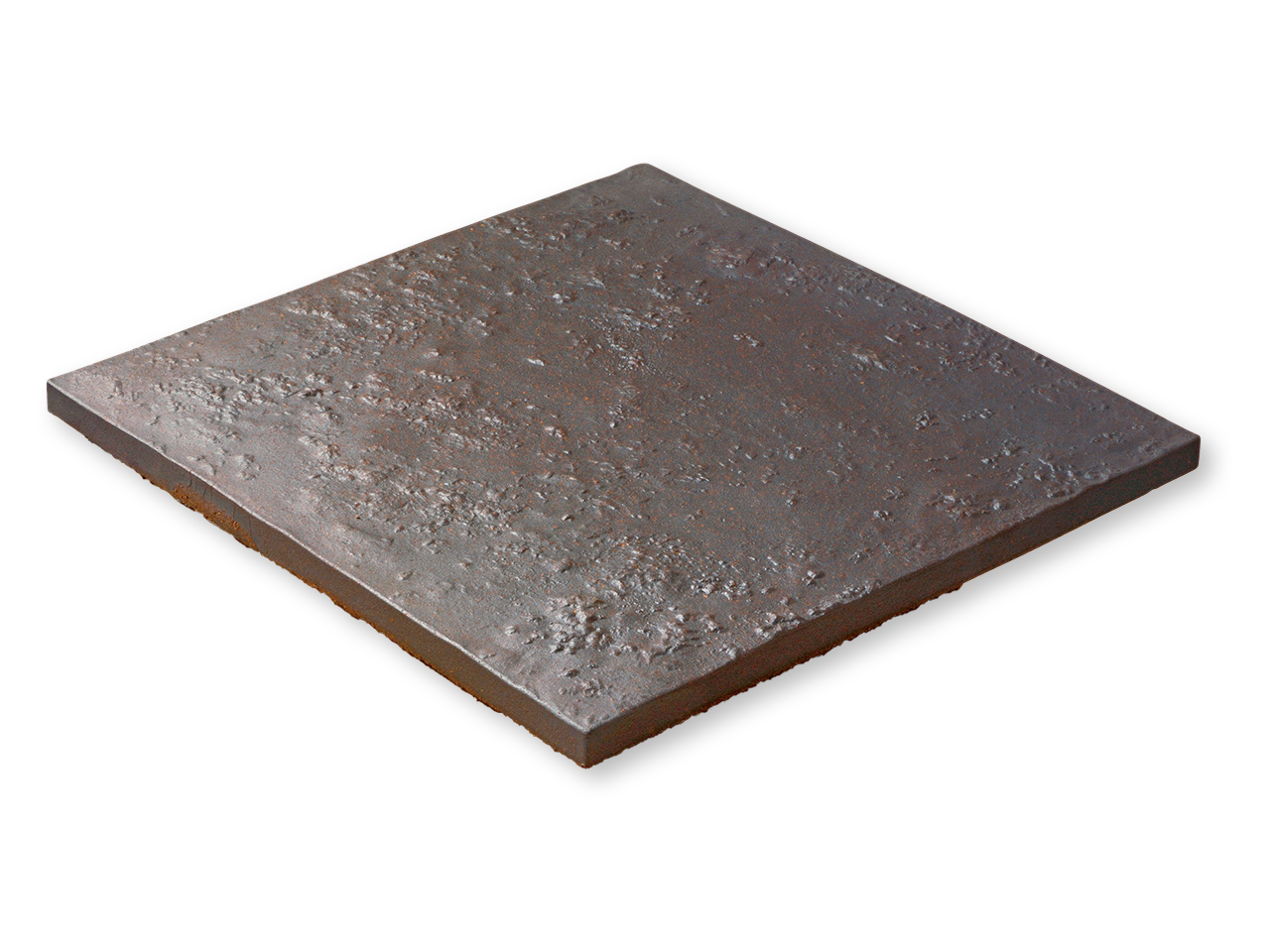
CLWA-304K. An example of a intricate textured tile
-
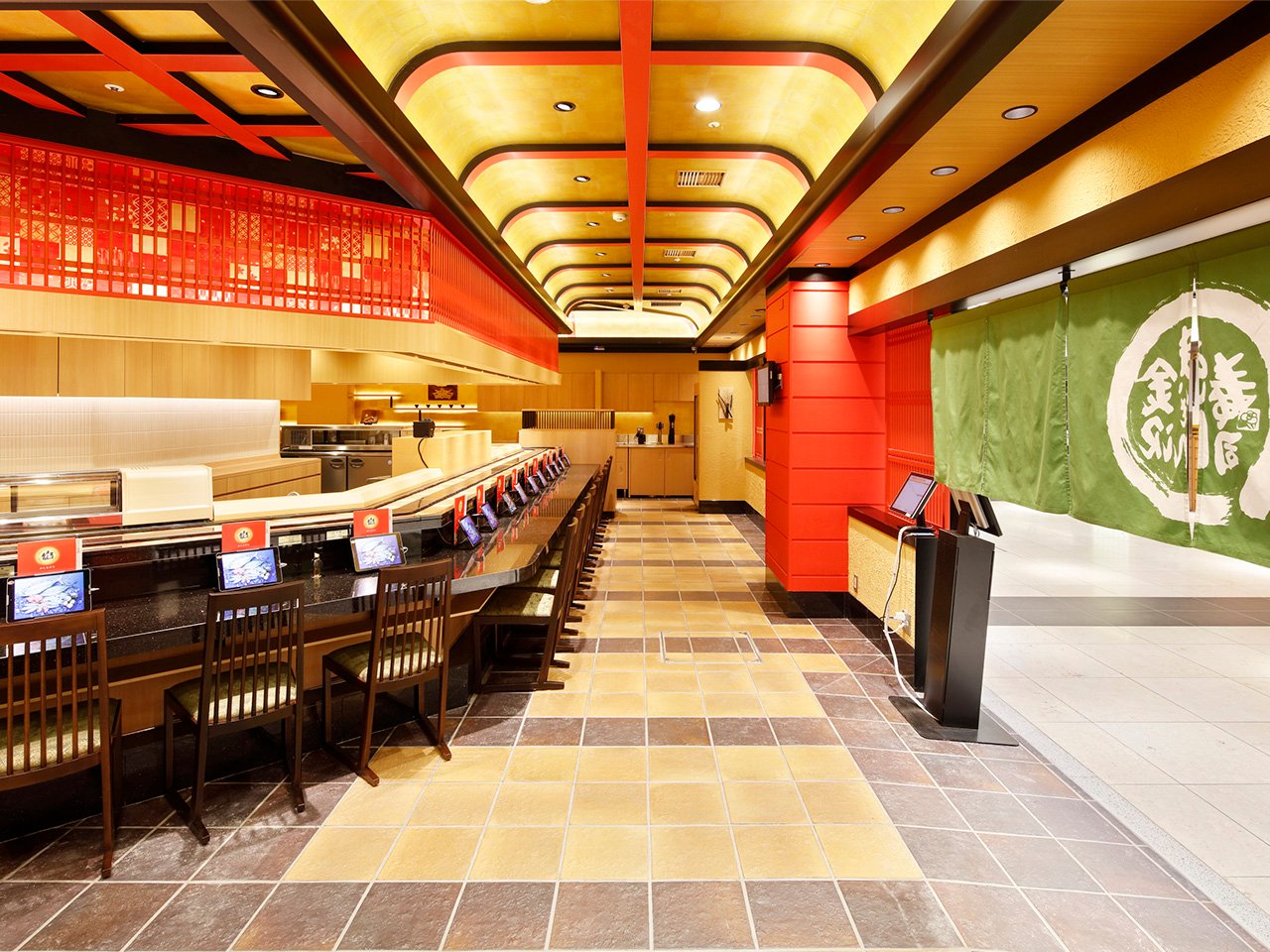
Kanazawa Maimon Sushi. Kyoto Porta.
Client: M & K Co., Ltd. Architect: Vario Design Associates Installation: Nikkatsu Space Design Co., Ltd.
Summary
With this article, we have explored slip casting, the third ceramic forming method featured on our blog. Alongside extrusion, slip casting is a wet-forming technique that offers truly unique design possibilities.
At WA-KEI, we invite you to discover the fascinating world of Japanese tiles, where tradition, innovation, and design come together to create spaces that leave a lasting impression.
Note: This article has been reviewed using ChatGPT.