Shadows, Texture, and Delicate Fissures: Toha
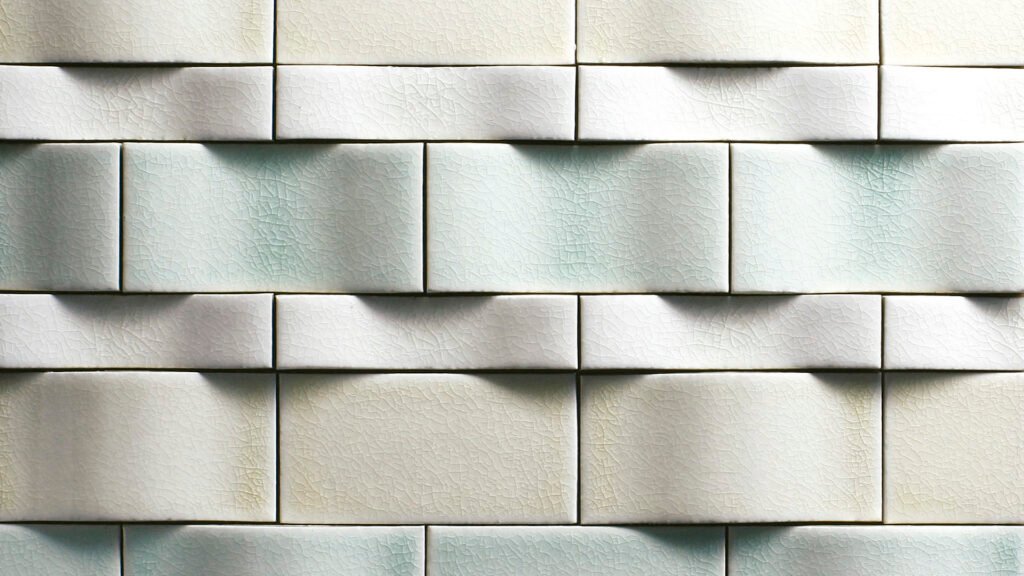
Some materials reveal their character only when observed closely. From a distance, they convey calm and balance; up close, their surfaces reveal subtle textures, shifting reflections, and delicate detail.
Toha is one of those unique Japanese tiles that can transform a space, adding depth, personality, and a quiet sense of refinement. Explore the secrets hidden within each cracked surface and discover why no two pieces are ever exactly alike.
Table of Contents
■ Features, Sizes, and Colors
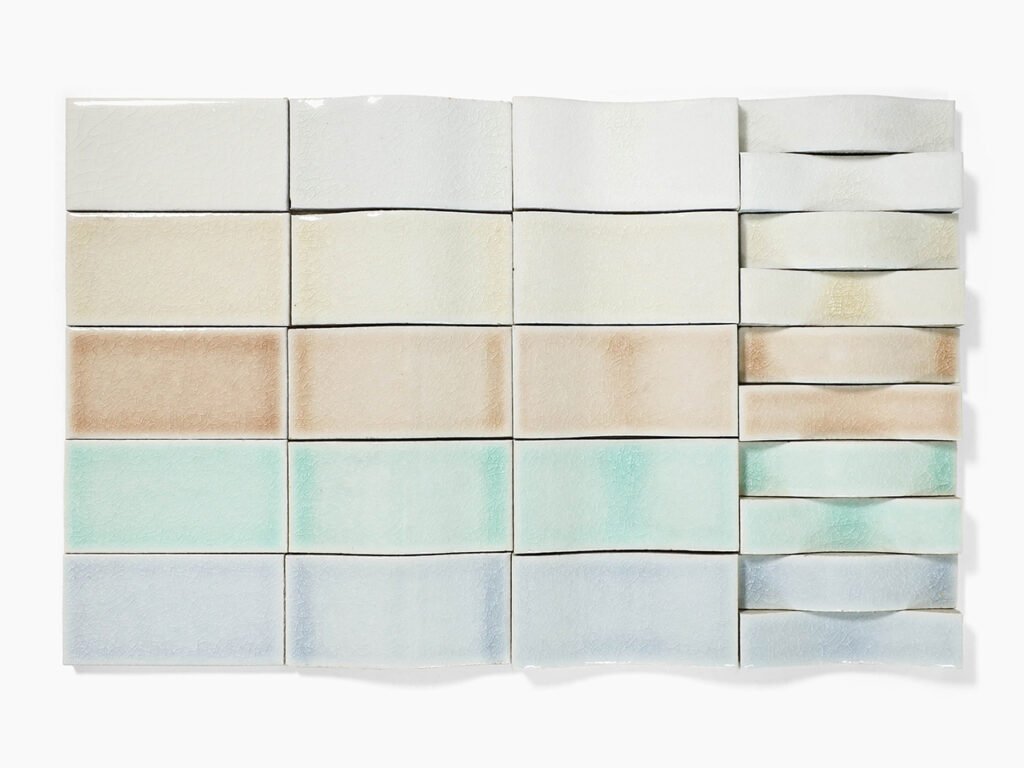
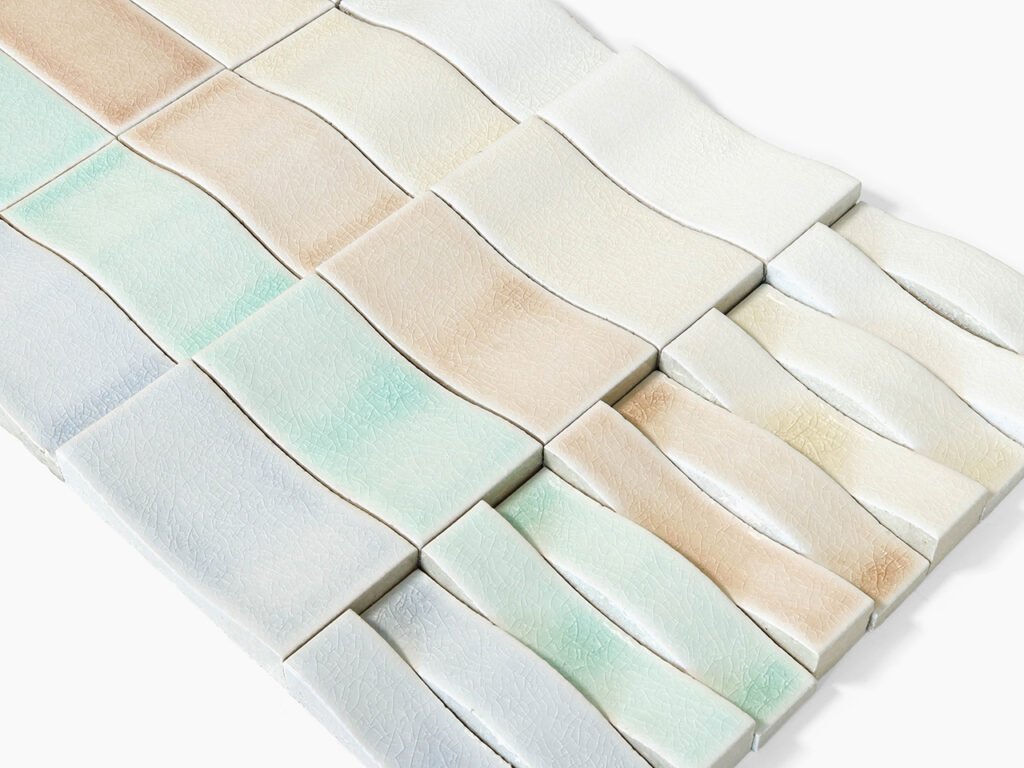
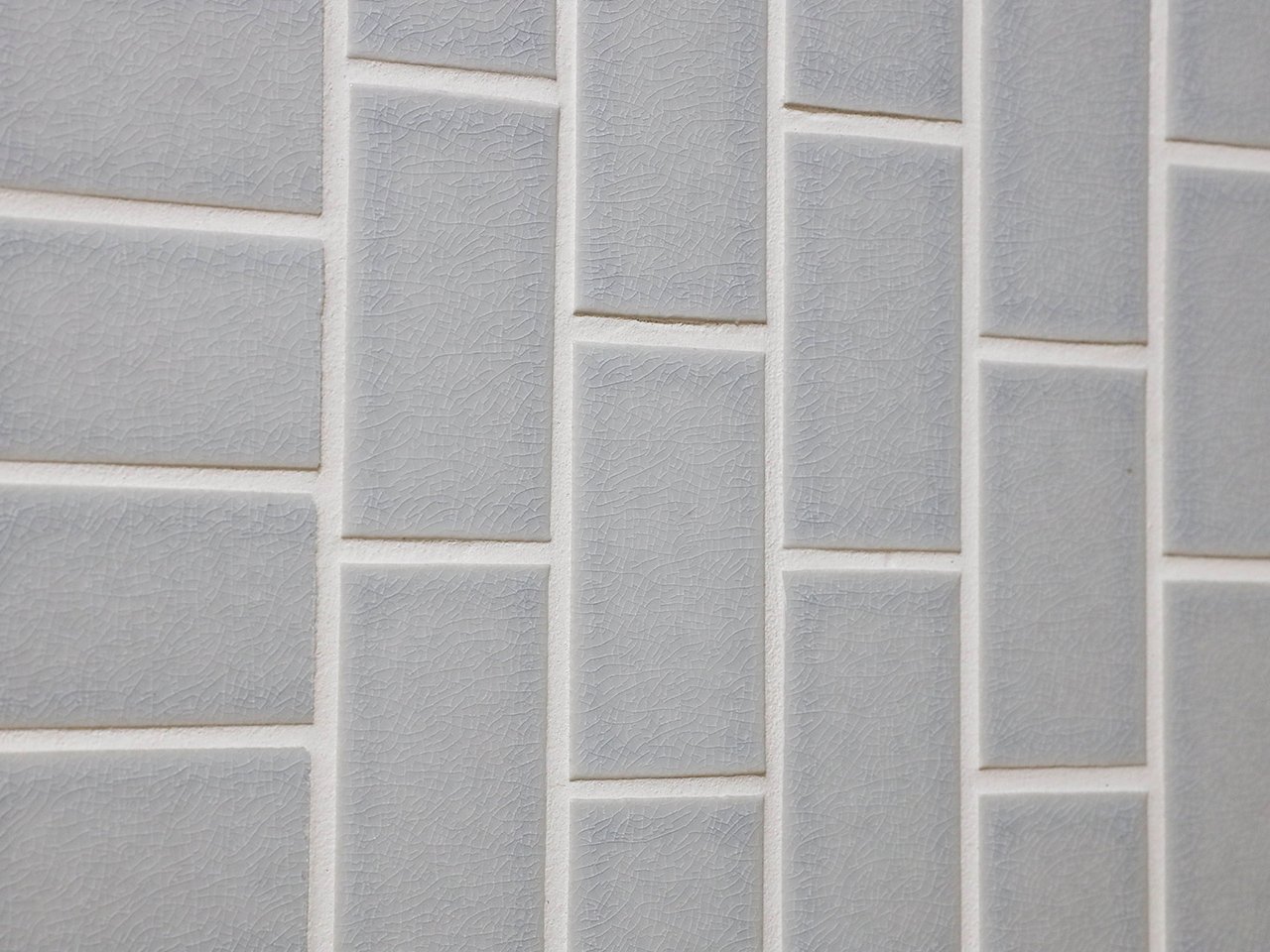
Toha tiles are defined by the delicate, naturally forming patterns on their glazed surfaces, a fine network of lines known in ceramics as crackle. Subtle color variatons, gentle glaze irregularities, and organically inspired three-dimensional shapes create a soft interplay of light and shadow, bringing out the full expressive depth of the glossy surface.
The collection comes in two main sizes: 60×120 mm (flat, convex, or concave) and 30×120 mm (convex or concave), with a total of five shapes and five colors available.
■ What Is the Crackle Effect?
| When tiles are fired in the kiln, heat causes them to expand slightly. As they cool after firing, they contract again. If the ceramic body and the glaze shrink at different rates, internal stresses develop on the glaze, producing the fine cracks characteristic of a crackle finish.
In fact, as the tiles are removed from the kiln and begin to cool, it is possible to hear crackling sounds as the glaze gradually develops these fissures. |
 |
■ Toha in Architecture: A Three-Dimensional Surface Rich in Detail
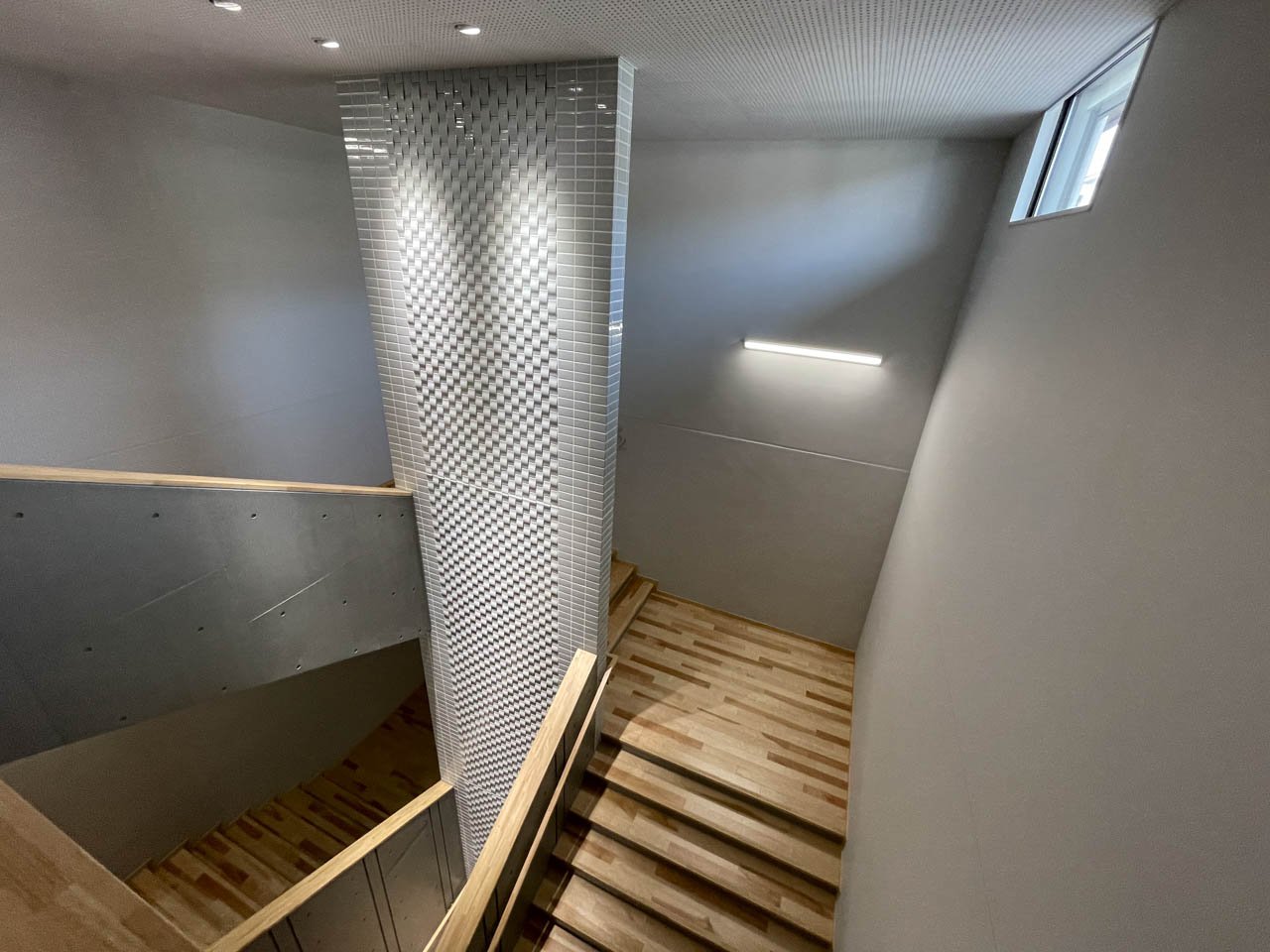
One example of its use can be seen in this project, where Toha was installed on the wall of the stairwell. In this space, Toha takes advantage of the contrast between the cool character of exposed concrete and the warmth of natural wood, creating a transitional space that also adds a sense of elegance.
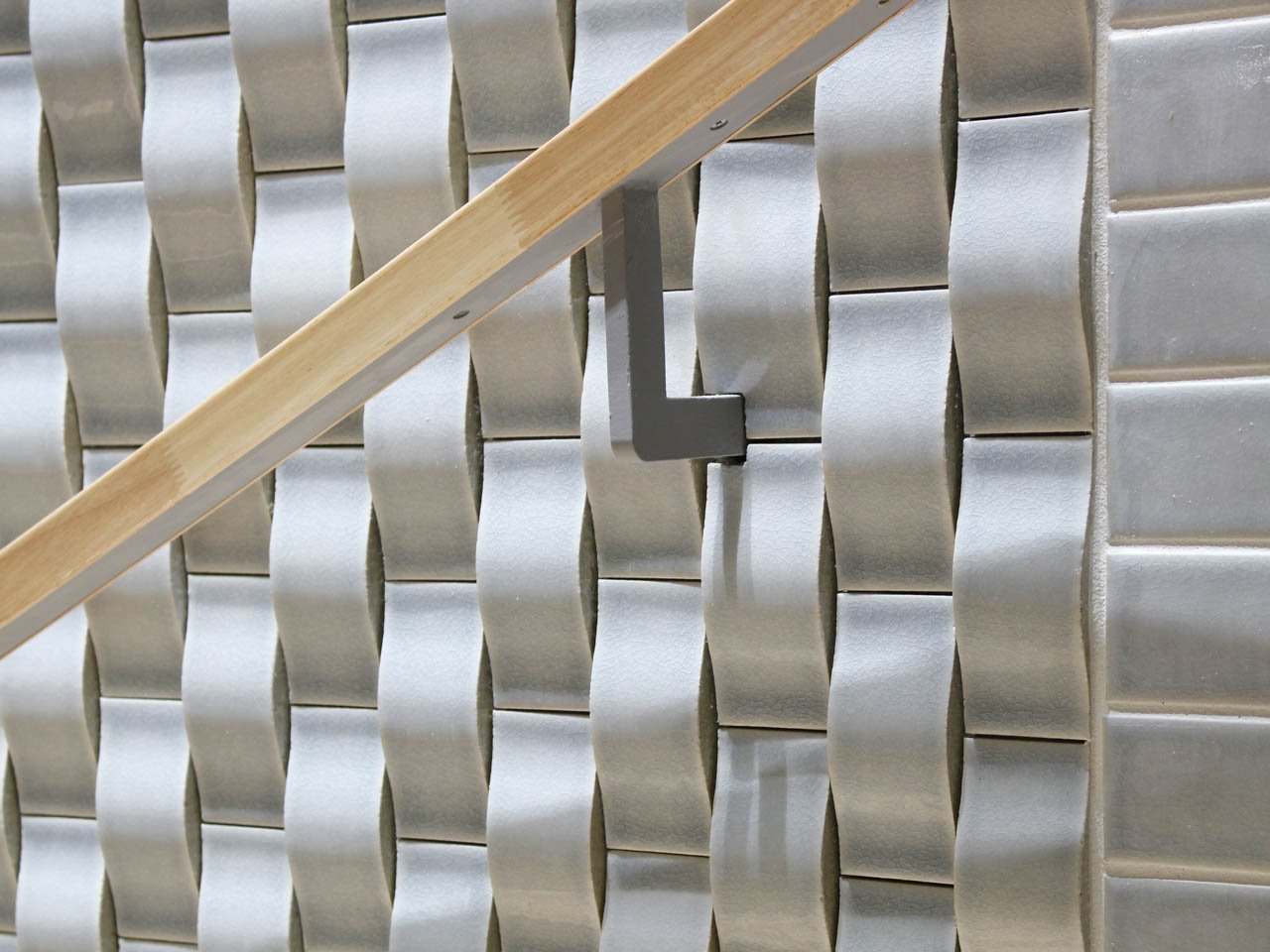
Viewed from a distance, the overall composition conveys a sense of warmth and depth. Although the tile uses a gray tone with an inorganic appearance, its curved forms and three-dimensional volume bring movement and dynamism to the surface. When different pieces are combined, the surface creates a subtle interplay of light and shadow that enhances the presence of the wall within the space.
Its relief, reminiscent of a woven pattern, also works as a visual accent that introduces rhythm to the composition and contributes to the richness of the overall design.
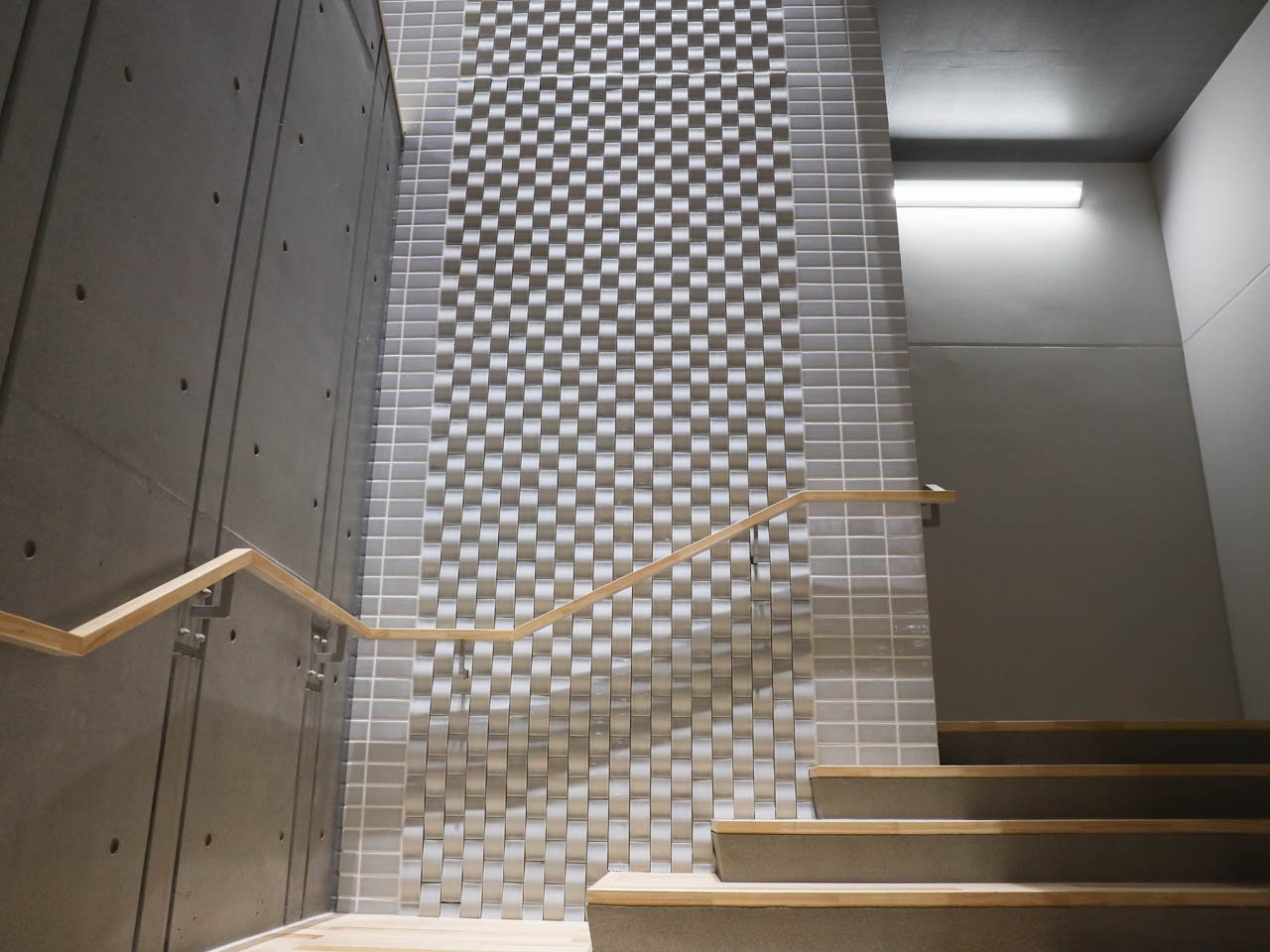
However, it is when viewed up close that the details that truly define this tile begin to emerge. The crackled glaze forms a delicate network of lines across the glassy surface, revealing the depth and complexity of the material.
Light glides across the glossy glaze and catches in the tiny fissures, highlighting the richness of the texture and conveying a sense of luxury and craftsmanship.
For this reason, Toha fits naturally not only in spaces inspired by Japanese design, but also in contemporary interiors like this one, where the balance between organic and inorganic elements can become a key feature of the project.
■ Summary
As we have seen, some traditional Japanese glazes can create delicate crackle patterns on the surface. In the Toha tile, this phenomenon is combined with three-dimensional forms and subtle variations in color to create a surface rich in details, where light and shadow enhance the depth of the material.
We invite you to visit the page dedicated to Toha and to Contact Us for more information or have any questions about your project.